
 Save
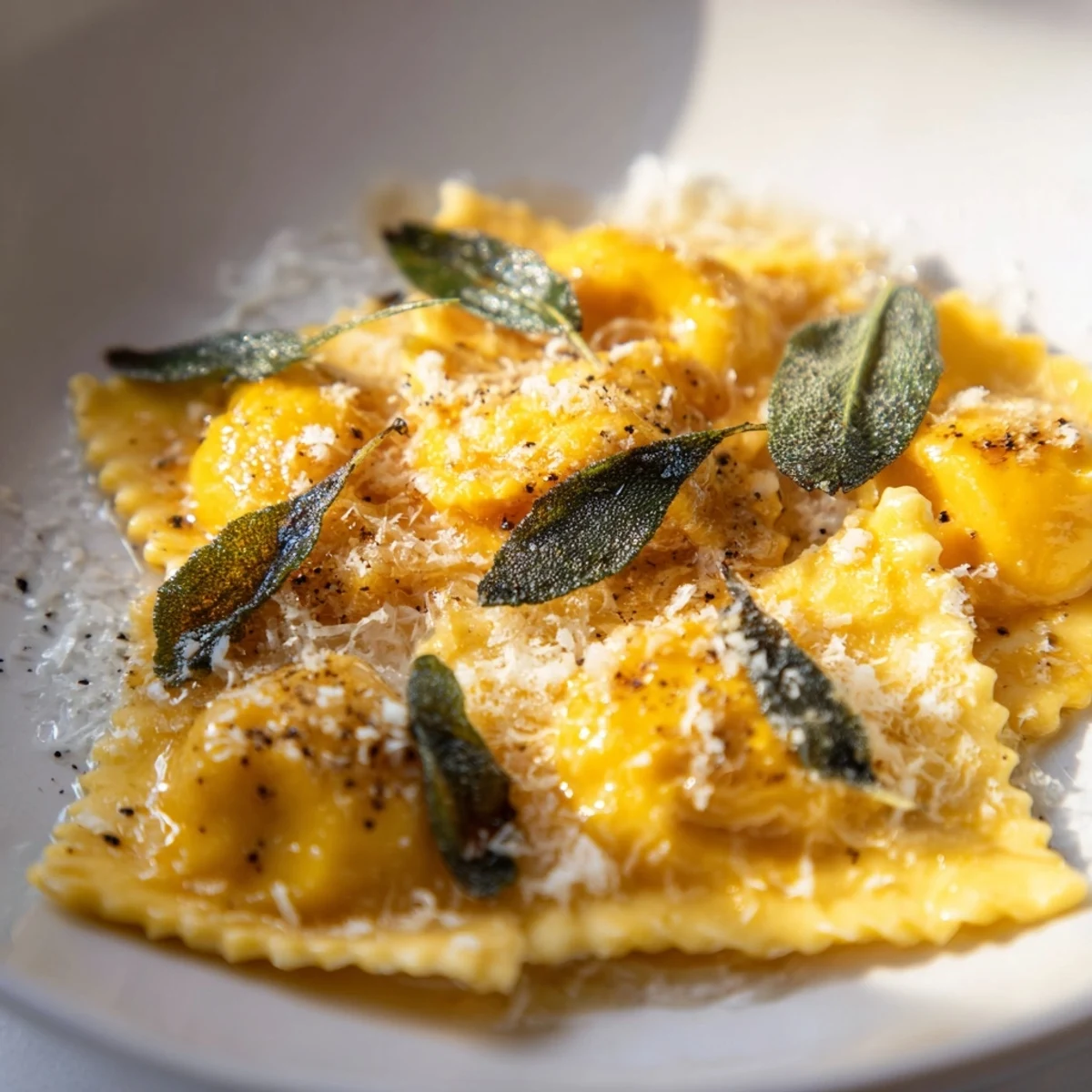
Save This dish features tender pasta pockets stuffed with creamy roasted butternut squash and ricotta filling. The ravioli is bathed in a fragrant, golden brown butter sauce infused with fresh sage leaves, offering a harmonious blend of sweet and savory flavors. Made from scratch using all-purpose flour and fresh eggs, the pasta dough is rolled thin and sealed carefully before brief simmering until they float. Finished with a sprinkle of Parmesan and freshly ground pepper, this elegant main course brings a comforting yet sophisticated flair to the table, perfect for a leisurely meal.
There's something about the moment when pasta water hits a perfectly browned sage leaf that makes you understand why Italian grandmothers protect their recipes like secrets. I made butternut squash ravioli for the first time on a cold October afternoon, and the kitchen filled with this warm, nutty aroma that had nothing to do with the squash and everything to do with butter turning golden in the pan. My hands were dusted with flour, the dough was finally smooth after what felt like forever of kneading, and I remember thinking this might be too ambitious for an afternoon project—but somehow, it wasn't.
I made this for my sister's birthday dinner last year, and she actually cried at the table—which felt dramatic until she tasted it and I understood. There's something about a dish you made with your own hands, something that took time and thought, that lands differently than anything else. She told me later that she'd been freezing these ravioli ever since and pulling them out on hard days.
Ingredients
- All-purpose flour (2 cups): The foundation of everything—don't skimp on good quality here, and definitely measure by weight if you have a scale because it changes everything.
- Large eggs (3): These are your glue, your richness, your emulsifier; they need to be at room temperature or the dough gets cranky.
- Salt (1/2 tsp for dough, plus more for filling): Taste constantly—salt is the flavor volume knob in this dish.
- Butternut squash (1 medium, about 1.5 lbs): Look for one that feels heavy for its size and has a hard rind; soft spots mean it's been sitting too long.
- Olive oil (1 tbsp): For roasting the squash—use something you like the taste of because you'll taste it.
- Ricotta cheese (1/2 cup): The creamy heart of the filling; whole milk ricotta is silkier than the low-fat versions.
- Grated Parmesan cheese (1/4 cup): Real Parmigiano-Reggiano makes a difference, but honestly, good domestic Parmesan works fine.
- Ground nutmeg (1/4 tsp): Fresh nutmeg is worth it if you have it, but measure carefully—this spice can overpower everything in one careless shake.
- Black pepper (1/4 tsp for filling): Grind it yourself; pre-ground tastes tired after sitting in the cabinet.
- Unsalted butter (1/2 cup): This is the star of the sauce, so use butter you actually like eating plain.
- Fresh sage leaves (12): Pick them a few hours before cooking if you can; the aroma changes the whole mindset of dinner.
- Extra Parmesan and black pepper for serving: Finish with generosity—this is the last flavor they remember.
Instructions
- Roast the squash into caramel:
- Preheat your oven to 400°F and toss those cubed squash pieces with olive oil and a pinch of salt and pepper. Spread them on a baking sheet so they aren't crowded—they need air around them to caramelize properly, not steam. Roast for 25 to 30 minutes until the edges are dark golden and the inside is so soft it practically falls apart when you press it with a fork.
- Build your dough while things cook:
- Pour your flour into a mound on a clean counter and make a well in the center like a volcano. Crack your eggs and salt into the middle, then use a fork to beat them gently while pulling flour from the inside walls of your mound. When it gets too stiff to handle, get your hands in there and knead until the dough is smooth and elastic, about 8 to 10 minutes—it should feel almost silky.
- Let dough rest and become forgiving:
- Wrap your dough in plastic and let it sit at room temperature for 30 minutes. This isn't wasted time; the gluten is relaxing and the dough becomes easier to roll without snapping back at you.
- Make filling that tastes like autumn:
- When your squash is cooled enough to handle, mash it until it's smooth with no chunks. Fold in the ricotta, Parmesan, nutmeg, salt, and pepper until everything is creamy and combined—taste it and adjust the salt because this is where all your flavor lives.
- Roll and shape your ravioli:
- On a lightly floured surface, roll the dough as thin as you can get it without tearing—about the thickness of a dime. Place teaspoon-sized mounds of filling 1.5 inches apart on one sheet, brush the gaps with water, cover with another sheet of dough, and press firmly around each mound to seal. Cut with a ravioli cutter, a knife, or even a drinking glass; the shape matters less than making sure the seal is tight.
- Brown the butter while ravioli cook:
- Get a large pot of salted water to a gentle boil and in a skillet melt your butter over medium heat. Watch it closely—add the sage leaves and let everything get golden brown together, about 3 to 4 minutes, until it smells like a woodland herb garden. The butter should be nutty and fragrant, not burnt.
- Cook ravioli gently and finish:
- Working in batches so you don't crowd the pot, drop ravioli into the simmering water. They'll sink at first, then float to the surface after about 2 to 3 minutes—that's your signal they're done. Fish them out with a slotted spoon and add them directly to your sage butter, tossing gently so each one gets coated.
 Save
Save There was this moment when I plated the first batch and set a bowl down in front of my roommate without saying anything—I just wanted to see what happened. She took one bite and closed her eyes, and in that second I understood that cooking isn't really about feeding people, it's about giving them permission to slow down and taste something.
The Squash Makes or Breaks Everything
Don't skip the roasting step thinking you can just boil the squash and save time. Roasting concentrates the sweetness and creates those caramelized edges that give the filling real depth. Boiled squash tastes watery and bland, and it will make you wonder why you bothered. The oven time is when you build your dough anyway, so nothing is actually taking longer—it's just working smarter.
Pasta Dough Without Machines
You don't need a pasta machine for this, though one is nice. A rolling pin and patience work just as well, and there's something satisfying about feeling the dough get thinner under your hands. The key is rolling thin enough that you can almost see light through it—if it's too thick, the filling-to-pasta ratio gets weird and you end up chewing dough instead of tasting the good part.
Variations and Make-Ahead Wisdom
Pumpkin works beautifully if butternut squash isn't available, and I've added a small pinch of chili flakes to the butter for friends who like heat—it doesn't overwhelm the sage, just adds a whisper of something unexpected. You can make and freeze these ravioli weeks ahead; just cook them straight from frozen and add a minute or two to the water time. A crisp white wine like Pinot Grigio or even a light Sauvignon Blanc cuts through the richness perfectly if you're pouring something.
- Fresh sage matters more than fresh squash, so if you're making this in winter, frozen roasted squash from the store is fine but fresh sage from the farmer's market is non-negotiable.
- Freeze uncooked ravioli on a baking sheet before bagging them, so they don't freeze in a clump and stay separate for easy portioning.
- Brown butter tastes better the next day, so don't shy away from making it ahead and reheating gently before serving.
 Save
Save This dish is one of those rare things that tastes luxurious enough to serve at a dinner party but simple enough that you'll want to make it on a random Tuesday just for yourself. Once you've done it once, your hands remember the dough and the next time is somehow easier.
Recipe FAQs
- → How do I make the pasta dough from scratch?
-
Combine all-purpose flour with eggs and salt to form a smooth dough. Knead for 8-10 minutes, then rest it wrapped for 30 minutes before rolling thin.
- → What is the best way to roast butternut squash for filling?
-
Cube peeled squash, toss with olive oil, salt, and pepper, then roast at 400°F (200°C) for 25-30 minutes until soft and caramelized.
- → How do I make the sage butter sauce?
-
Melt unsalted butter over medium heat, add fresh sage leaves, and cook until the butter turns golden brown and the sage is crisp, then remove from heat.
- → How long should the ravioli be cooked?
-
Simmer ravioli in gently boiling salted water for about 2-3 minutes, until they float to the surface.
- → Can I add spice to the sage butter sauce?
-
Yes, adding a pinch of chili flakes to the sage butter provides a pleasant spicy kick without overpowering the flavors.