
 Save
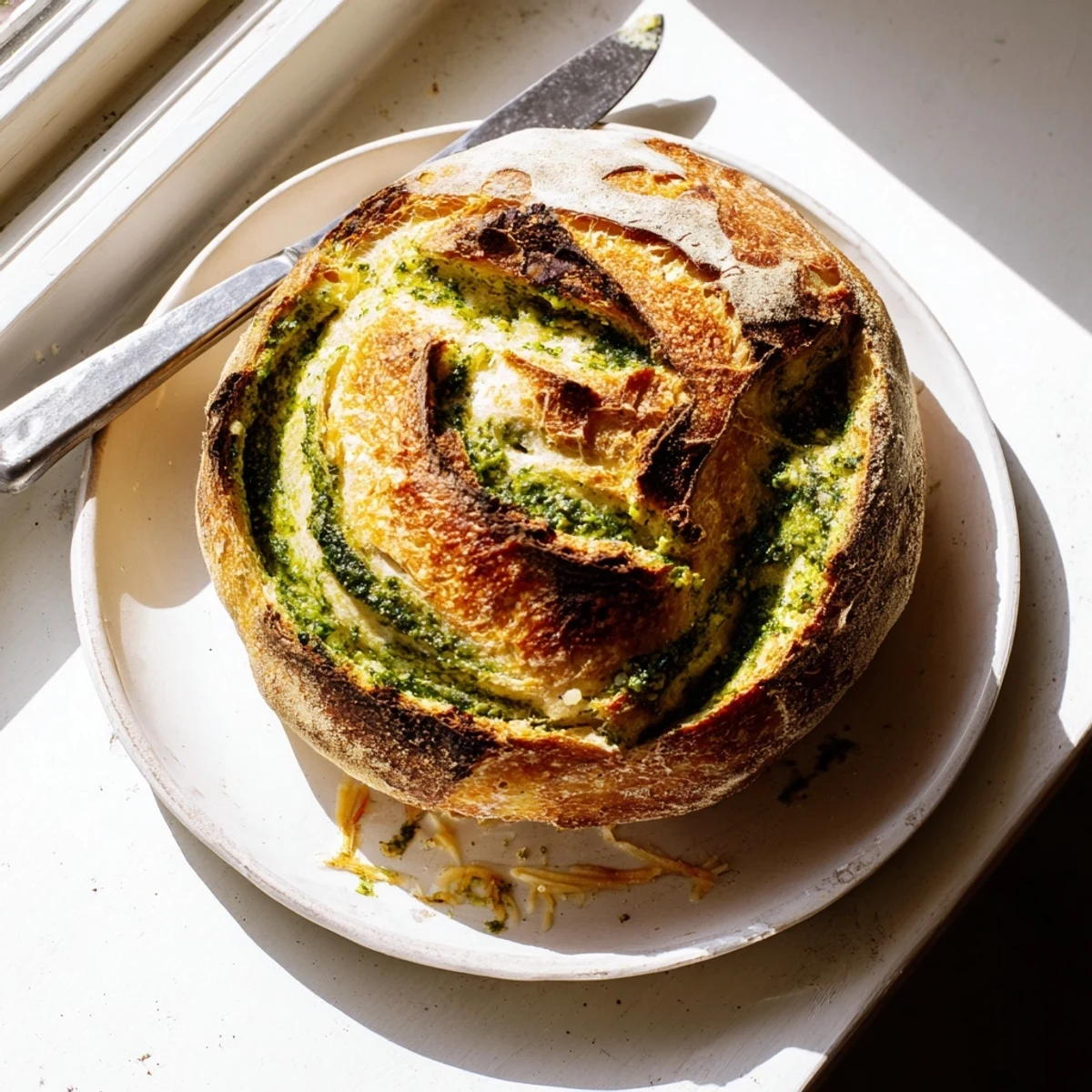
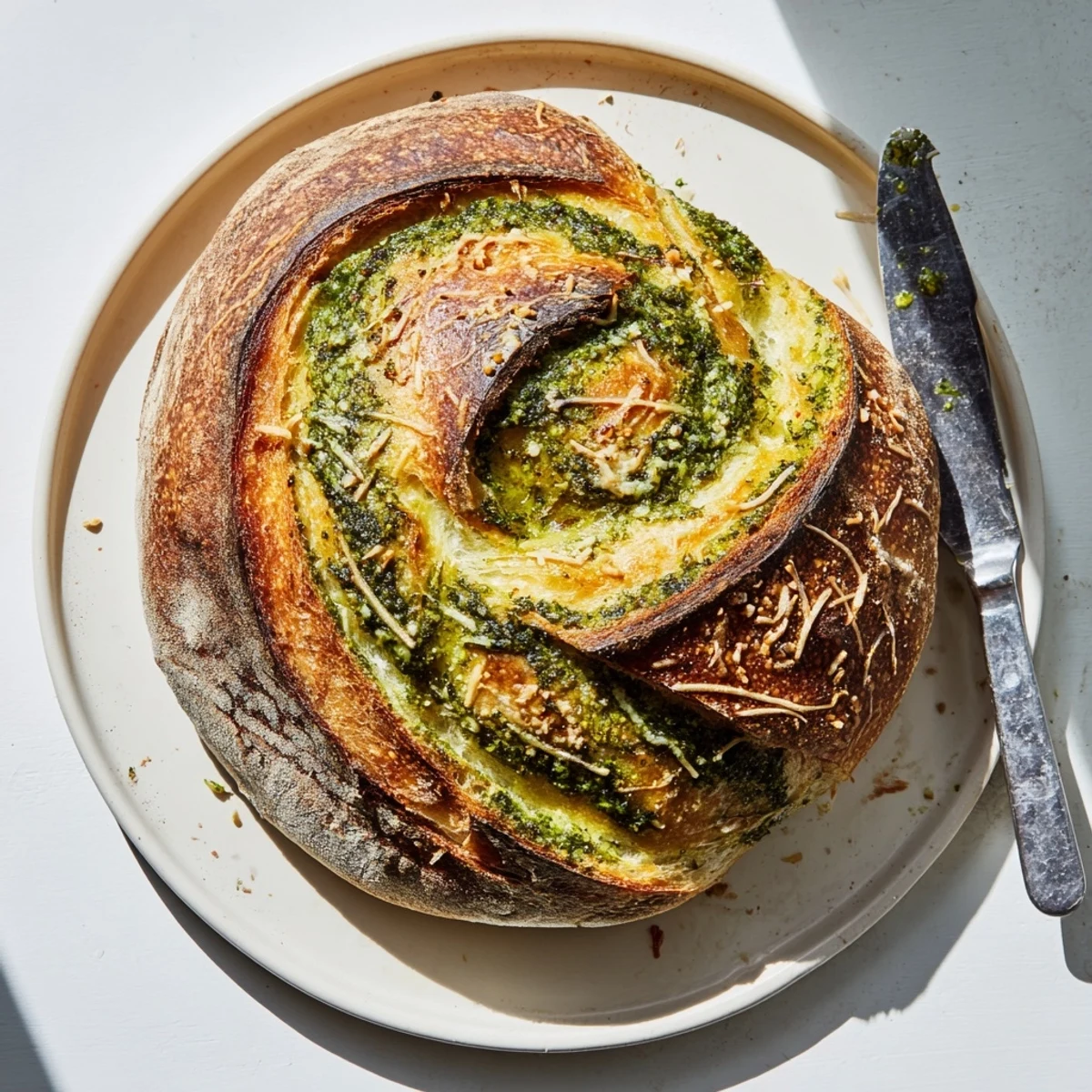
Save This artisan sourdough combines traditional fermentation techniques with vibrant Italian flavors. The dough undergoes autolyse and multiple stretch-and-fold cycles to develop structure and gluten strength. After rising, the dough is filled with aromatic basil pesto and freshly grated Parmesan, creating beautiful swirls throughout the crumb. The loaf is baked in a Dutch oven at high heat, producing a crackling crust while maintaining a tender, chewy interior. The result balances tangy sourdough notes with herbaceous pesto and savory cheese, making it excellent for dipping, grilled sandwiches, or enjoying warm with olive oil.
The first time I swirled pesto into sourdough, I wasnt trying to be fancy. I just had extra basil from my garden that needed using and a hungry crowd coming over for dinner. When that bread came out of the oven, the smell of toasted Parmesan hit me first, then this incredible herbal fragrance that made everyone wander into the kitchen. Now its the bread my friends actually text me about days later.
Last summer I made three loaves back to back because my brother kept taking the leftovers home. He texts me photos of his sandwiches now, ones with thick slabs of this bread piled high with tomatoes and mozzarella. Its funny how something that started as a use-up-ingredients experiment became the bread people request most often.
Ingredients
- 500 g bread flour: High protein flour gives this bread structure to hold all that pesto without collapsing in the oven
- 350 ml lukewarm water: Warm water wakes up your starter faster and makes the dough more extensible for shaping
- 100 g active sourdough starter: Use starter at its peak, bubbly and doubled, for the best rise and that classic tangy flavor
- 10 g fine sea salt: Fine salt dissolves evenly throughout the dough, unlike coarse salt which can leave salty pockets
- 70 g basil pesto: Room temperature pesto spreads easier and wont make the dough seize up from cold temperature shock
- 50 g freshly grated Parmesan cheese: Grate it yourself because pre grated cheese has anti caking agents that prevent proper melting
- 1 tbsp olive oil: Brushing the crust before baking helps the Parmesan cling and creates that gorgeous golden sheen
Instructions
- The Autolyse Rest:
- Mix just flour and water until no dry patches remain, then cover and walk away for 30 to 45 minutes. This rest period lets the flour hydrate fully, which makes later kneading so much easier and develops better gluten structure.
- Incorporating Starter and Salt:
- Add your starter to the dough and use your fingers to pinch it through until well distributed, then sprinkle in the salt. Mix thoroughly until the dough starts to smooth out and feel elastic instead of shaggy.
- Building Strength with Folds:
- Every 30 minutes for 2 hours, grab one side of the dough and stretch it up high before folding it over the center. Rotate the bowl and repeat four times per fold session, which slowly transforms the dough from slack to strong and windowpane thin.
- The Final Rest:
- After your fourth fold, let the dough rest untouched for 1 full hour at room temperature. This relaxation period makes shaping much easier since the gluten has time to settle down.
- Shaping and Filling:
- Turn your dough onto a floured surface and gently press it into a rectangle, then spread pesto evenly while leaving that 2 cm border so nothing leaks out. Sprinkle 40 g of Parmesan over the pesto, roll from the short end into a tight log, then shape into a round or batard depending on your banneton.
- Proofing Time:
- Place your shaped dough seam side up in a well floured banneton, cover, and let rise for 2 to 3 hours until it feels puffy and jiggly when you gently shake the basket. For deeper flavor development, you can refrigerate overnight instead and bake straight from the fridge.
- Preheating Strategy:
- Position your oven rack in the center and preheat to 230°C with your Dutch oven inside for at least 30 minutes. That vessel needs to be blazing hot to create the steam burst that gives you that professional bakery style crust.
- Getting Ready to Bake:
- Turn your proofed dough onto parchment paper, brush the top with olive oil, and sprinkle generously with the remaining Parmesan. Score with your preferred pattern, which helps the bread expand predictably in the oven.
- The Covered Bake:
- Bake in the preheated Dutch oven with the lid on for 20 minutes, trapping steam that keeps the crust soft while the interior expands fully. This steam phase is crucial for that beautiful oven spring you see in artisan breads.
- Revealing the Crust:
- Remove the lid and continue baking for another 18 to 20 minutes until the Parmesan turns golden brown and the crust sounds hollow when tapped on the bottom. The color development happens fast once the lid comes off, so keep watching closely.
- The Hardest Part:
- Cool completely on a wire rack for at least an hour before slicing into your masterpiece. Cutting warm bread ruins the crumb structure and makes the texture gummy, so be patient and let those starches set properly.
 Save
Save My neighbor smelled this baking and actually knocked on my door to ask what I was making. I gave her a warm slice with just butter and she stood in my kitchen eating it, telling me about her Italian grandmother while the bread was still too hot to touch properly. Now we have a standing arrangement where I bring her a loaf whenever I fire up the oven.
Pesto Variations That Work
While classic basil pesto is gorgeous here, I have found that sun dried tomato pesto creates this incredible red and gold swirl that looks stunning on a holiday table. Walnut pesto adds earthiness that pairs beautifully with soups, and I have even experimented with arugula pesto for a peppery kick that cuts through rich cheeses. Just keep the quantity the same so your dough hydration stays consistent.
Storage and Refreshing
This bread keeps remarkably well wrapped in a bread bag for up to three days, though the crust will soften over time. To recrisp, I sprinkle the loaf lightly with water and bake at 180°C for about 8 minutes, which brings back that crackly exterior. For longer storage, slice before freezing and toast individual slices straight from the freezer, about 3 to 4 minutes per side.
Serving Ideas That Shine
The flavor profile here is bold enough that this bread can stand alone as a meal starter, but it also transforms ordinary sandwiches into something special. I love it with tomato soup, piled high with caprese salad ingredients, or even just toasted with a heavy smear of salted butter.
- Grill thick slices with extra mozzarella for the most incredible pesto grilled cheese
- Cube leftover bread and toast into croutons that will elevate any Caesar salad
- Use slightly stale slices to make a strata or bread pudding that is anything but ordinary
 Save
Save There is something deeply satisfying about cutting into this bread and seeing those vibrant green ribbons running through each slice. It is the kind of recipe that turns ordinary Tuesday dinners into something worth celebrating.
Recipe FAQs
- → How long does the dough need to rise?
-
The total rising time ranges from 5-8 hours depending on temperature. After the initial stretch-and-fold cycles (2 hours), the dough rests for 1 hour before shaping. The final proof takes 2-3 hours at room temperature or overnight in the refrigerator for deeper flavor development.
- → Can I use different types of pesto?
-
Absolutely. While basil pesto is traditional, sun-dried tomato pesto, walnut pesto, or even roasted red pepper spread work beautifully. Each variation creates unique flavor profiles and can be paired with complementary cheeses like asiago or aged provolone.
- → What if I don't have a Dutch oven?
-
A baking stone preheated in a very hot oven creates similar results. Alternatively, bake on a heavy baking sheet and create steam by placing a tray of ice cubes on the bottom rack. This helps develop a crispy, golden crust.
- → How should I store this bread?
-
Store at room temperature in a paper bag for up to 2 days, wrapped loosely in cloth to maintain crust texture. For longer storage, slice and freeze in an airtight container. Reheat frozen slices in a 350°F oven for 5-7 minutes to refresh the crust.
- → Can I make this without sourdough starter?
-
You can substitute with a poolish or biga preferment, though the flavor profile will differ. Alternatively, use instant yeast combined with a longer fermentation in the refrigerator to develop some sour notes, though the characteristic tang will be milder than true sourdough.
- → Why is my dough too sticky to handle?
-
High-hydration doughs naturally feel sticky. Keep your hands lightly floured and work quickly. The dough strengthens through stretch-and-folds. If extremely sticky, perform an extra fold set or chill the dough for 20 minutes before shaping.