
 Save
Save These chocolate covered orange peels transform simple citrus into an elegant confection. Fresh orange peels are blanched to remove bitterness, then slowly simmered in sugar syrup until translucent and tender.
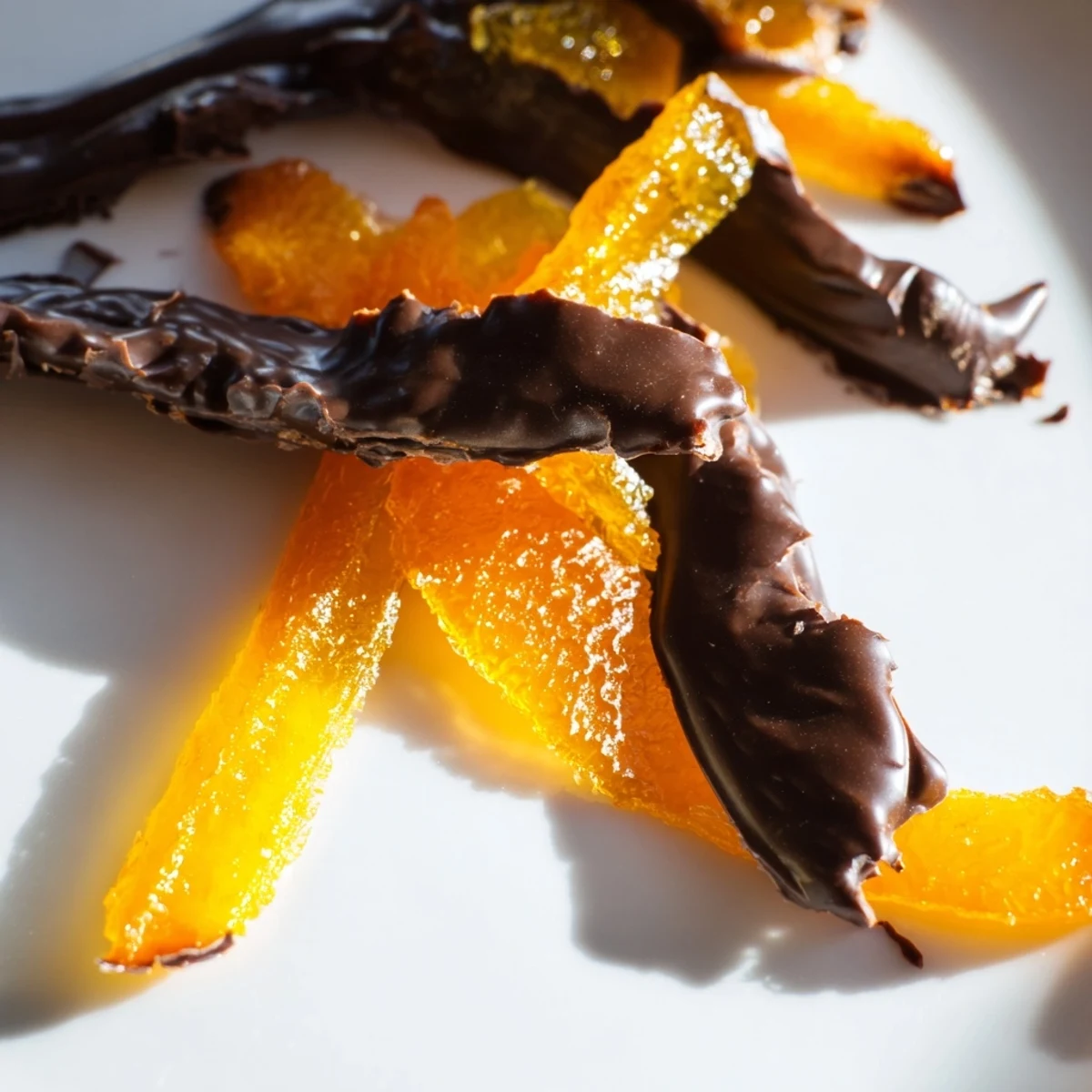
Once dried, each candied strip is dipped halfway into melted dark chocolate and left to set. The combination of sweet, chewy orange peel and bittersome chocolate creates a perfectly balanced treat.
Ideal for homemade gifts, holiday platters, or an afternoon indulgence alongside espresso. They store well in an airtight container for up to two weeks.
The smell of orange peels simmering in sugar syrup is the kind of thing that makes neighbors knock on your door and ask what on earth you are making. I stumbled into candied orange peels one rainy December afternoon when I had eaten three oranges and could not bring myself to throw away the skins. What started as a curious experiment turned into the most requested homemade gift in my circle of friends. Dark chocolate and orange together have a way of making even a grey Tuesday feel like a holiday.
I brought a tin of these to a friends housewarming party last winter and watched a room full of adults completely ignore the fancy store bought desserts on the table. Someone actually hid a few in their coat pocket for later, which might be the highest compliment a homemade treat can receive.
Ingredients
- 3 large oranges (organic preferred): Organic skins yield a cleaner, brighter flavor since you are essentially concentrating everything on the surface into candy.
- 2 cups (400 g) granulated sugar: This forms the syrup that transforms tough, bitter peels into translucent jewels.
- 1 cup (240 ml) water: Combined with the sugar to create the simmering bath that does all the hard work.
- 200 g dark chocolate (60 to 70% cocoa), chopped: Anything in this range gives you a snappy shell with enough sweetness to balance the citrus without overwhelming it.
Instructions
- Peel the oranges:
- Wash the oranges thoroughly under warm water, then slice off the top and bottom of each one so they sit flat on your board. Score the skin into quarters with a sharp knife and gently peel each section away, keeping a thin layer of white pith attached because it adds texture and a slight bitterness that works beautifully with the chocolate.
- Cut into strips:
- Slice the peels into even strips about half a centimeter wide so they cook uniformly and look elegant once coated.
- Blanch the bitterness away:
- Drop the strips into a saucepan, cover with cold water, and bring to a rolling boil before draining completely. Repeat this process two more times and you will notice the water becomes clearer each round as the harsh bitterness melts away.
- Make the syrup:
- In a clean saucepan, stir the sugar and water together over medium heat until you see no more grains at the bottom. Slide the blanched peels in gently and watch them begin to bubble and soften almost immediately.
- Simmer until translucent:
- Let the peels cook uncovered for 45 to 60 minutes, stirring every now and then so nothing sticks or burns. You will know they are ready when the strips glow amber and feel tender when you pinch one between your fingers.
- Dry the candied peels:
- Lift each strip out with tongs and lay them on a wire rack, leaving space between them so air can circulate. Give them at least two hours or ideally overnight until the surface is no longer tacky to the touch.
- Melt the chocolate:
- Set a heatproof bowl over a pot of barely simmering water, making sure the bottom never touches the water itself. Add the chopped chocolate and stir occasionally until it melts into a glossy, smooth pool that coats the back of a spoon.
- Dip and set:
- Holding one end of each peel, dip it halfway into the chocolate and let the extra drip back into the bowl with a gentle shake. Arrange them on parchment paper and let the chocolate harden at room temperature, or pop the tray into the fridge if you are impatient like me.
 Save
Save There is something deeply satisfying about lining up thirty glossy chocolate dipped orange peels on your kitchen counter and knowing you made them from scraps that most people throw away without a second thought.
A Few Words on Chocolate Choice
I have tested this recipe with everything from inexpensive supermarket chocolate to fancy single origin bars and the truth is that anything above 60 percent cocoa works beautifully. The key is avoiding chocolate with too many added oils because they prevent a clean, snappy coating. Chop the chocolate small and evenly so it melts without any stubborn lumps hiding in the corners of your bowl.
Storing and Gifting
Layer the finished peels between sheets of parchment inside an airtight container and they will stay perfect for up to two weeks in a cool, dry cupboard. For gifting, small metal tins or cellophane bags tied with kitchen twine make these look intentionally beautiful rather than homemade in a messy way.
Small Details That Matter
Little touches make the difference between good and unforgettable candied peels, and most of them cost nothing but attention.
- Roll the candied peels in extra sugar before dipping for a sparkly, sweeter variation that kids especially love.
- Milk or white chocolate works too if dark feels too intense, though you lose some of that sophisticated edge.
- Serve these alongside a tiny cup of espresso or a glass of dessert wine and watch people close their eyes on the first bite.
 Save
Save Every time I make these, I think about how the simplest ingredients in your kitchen can become something extraordinary with nothing more than patience and a bit of sugar. That is the real recipe worth remembering.
Recipe FAQs
- → Do I need to remove all the white pith from the orange peels?
-
No, leaving a thin layer of white pith adds a pleasant chewiness and slight bitterness that balances the sweetness. However, if you prefer a milder flavor, you can trim more of it away with a spoon or knife before slicing.
- → Why do I need to blanch the peels three times?
-
Repeated blanching draws out the bitter compounds from the peel. Each boil-and-drain cycle softens the bitterness significantly, resulting in a sweeter, more enjoyable candied peel.
- → Can I use milk or white chocolate instead of dark chocolate?
-
Yes, milk or white chocolate works beautifully if you prefer a sweeter coating. Keep in mind that white chocolate is more delicate when melting, so use gentle heat and stir frequently to avoid seizing.
- → How long should the candied peels dry before dipping in chocolate?
-
Allow the peels to dry on a wire rack for at least 2 hours, though overnight drying yields the best results. The surface should feel tacky but not wet or sticky to the touch before dipping.
- → What is the best way to store chocolate covered orange peels?
-
Store them in an airtight container in a cool, dry place away from direct sunlight. They will keep well for up to 2 weeks. You can also refrigerate them, but bring them to room temperature before serving for the best texture and flavor.
- → Which type of oranges work best for candied peels?
-
Large, thick-skinned oranges such as Navel or Seville are ideal because they yield more peel and have a pronounced citrus flavor. Organic oranges are recommended since you are using the outer skin.