
 Save
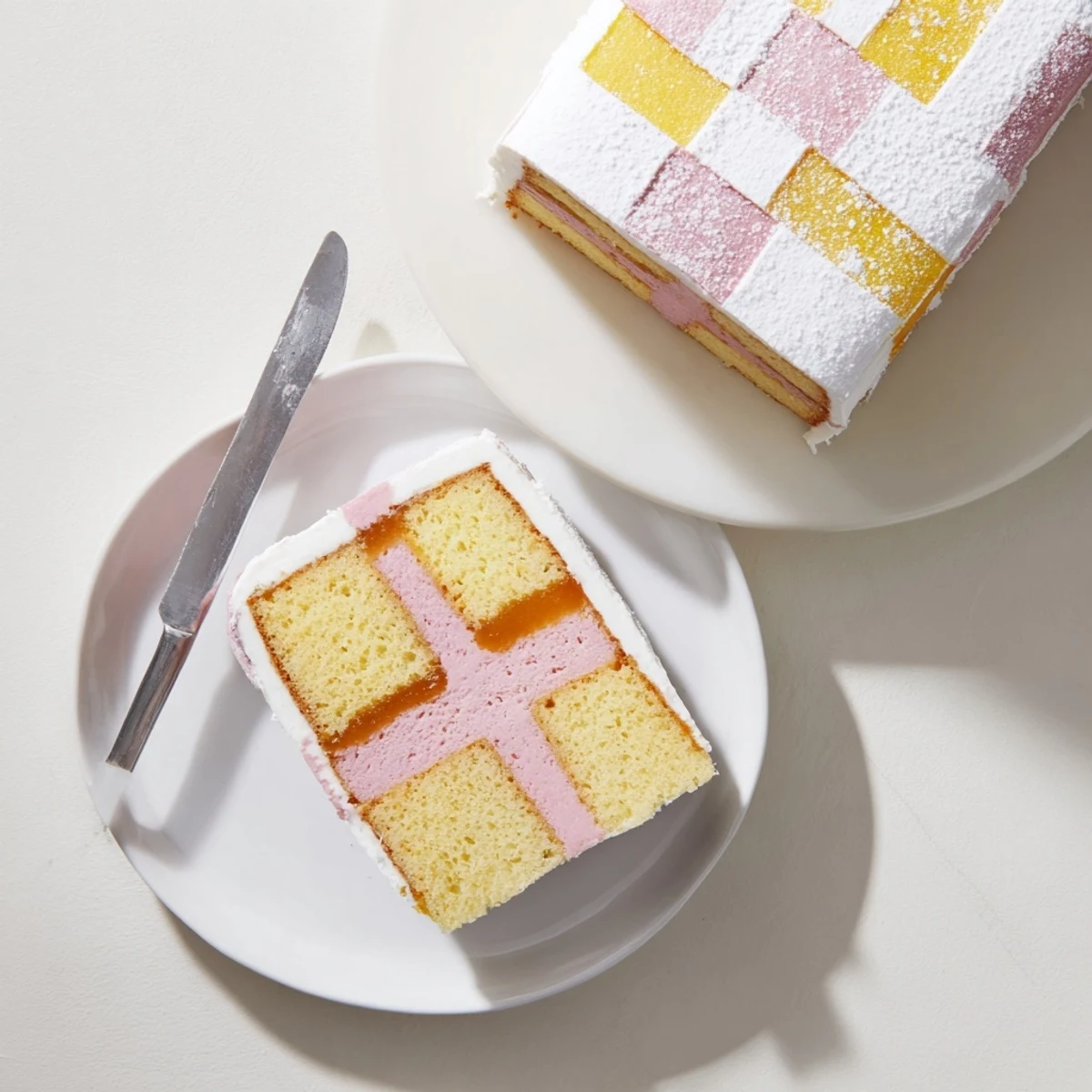
Save Create this iconic British teatime favourite featuring a distinctive pink and yellow checkerboard sponge. The light, almond-flavoured cake layers are assembled with warm apricot jam and enveloped in sweet marzipan for the classic presentation. Perfect for afternoon tea or special occasions.
My first attempt at Battenberg Cake ended up looking more like a confused chessboard than the elegant checkerboard I'd envisioned. The marzipan tore, the jam oozed everywhere, and my pink sponge came out a shocking neon color that belonged in a 1980s disco rather than a proper British teatime. But somehow, that messy, gloriously uneven cake became the most requested bake among my friends, who couldn't get enough of the almond scented sponge and sweet jam filling.
I made this for my grandmothers 85th birthday, having practiced the technique for weeks. She took one look at those neat little squares, smiled with that knowing twinkle in her eye, and told me about the Battenberg cakes she'd had in London during the war years, when such treats were rare treasures. We sat at her kitchen table with proper cups of tea, and she taught me that the real secret isn't perfection it's making something beautiful for the people you love.
Ingredients
- 175 g unsalted butter, softened: Room temperature butter creates that beautifully light sponge texture, so don't rush this step or try to microwave it soft
- 175 g caster sugar: The fine sugar dissolves better into the butter, giving you that delicate crumb structure
- 3 large eggs: Bring these to room temperature too they'll incorporate more evenly and prevent your batter from curdling
- 140 g self raising flour: If you only have plain flour, add 1½ tsp baking powder, but the self raising gives more reliable results
- 65 g ground almonds: This is the secret to that signature nutty flavor and moist texture that makes Battenberg so distinctive
- 1 tsp baking powder: Ensures a good rise even with the weight of ground almonds in the batter
- ½ tsp vanilla extract: Use the good stuff here it shines through in the finished cake
- ¼ tsp almond extract: A little goes a long way, and this is what gives Battenberg its characteristic taste
- Pink food colouring: Gel colouring works best as it won't thin your batter, but liquid is fine if you're careful
- 200 g apricot jam: The traditional choice and the perfect tart contrast to all that sweetness
- 350 g marzipan: Homemade is lovely, but good quality shop bought works perfectly
- Icing sugar: Essential for rolling out the marzipan without it sticking to everything
Instructions
- Prepare your divided tin:
- The tin divider is worth taking time over fold parchment around foil to create a sturdy wall that won't let the colors bleed into each other
- Cream the butter and sugar:
- Beat until the mixture turns pale and fluffy, about 3 to 5 minutes this creates the air pockets that make the sponge light
- Add the eggs gradually:
- Beat each egg in completely before adding the next, and don't worry if it looks slightly curdled it'll come back together when you add the flour
- Fold in the dry ingredients:
- Use a figure eight motion and stop as soon as you no longer see flour overmixing will make your sponge tough
- Divide and color the batter:
- Weigh both bowls to ensure they're equal, then add colouring drop by drop you can always add more but you can't take it away
- Bake the sponges:
- The cakes are done when they spring back when touched and a skewer comes out clean, usually around 25 to 30 minutes
- Trim and cut the sponges:
- Use a sharp knife and a ruler if you're particular about straight edges, though I find a steady hand and careful eye work just fine
- Assemble the checkerboard:
- Warm your jam slightly so it brushes on easily, and think of it as edible glue holding your pattern together
- Wrap in marzipan:
- Roll your marzipan into a rectangle that's about ¼ inch thick and wide enough to wrap completely around the assembled cake with some overlap
 Save
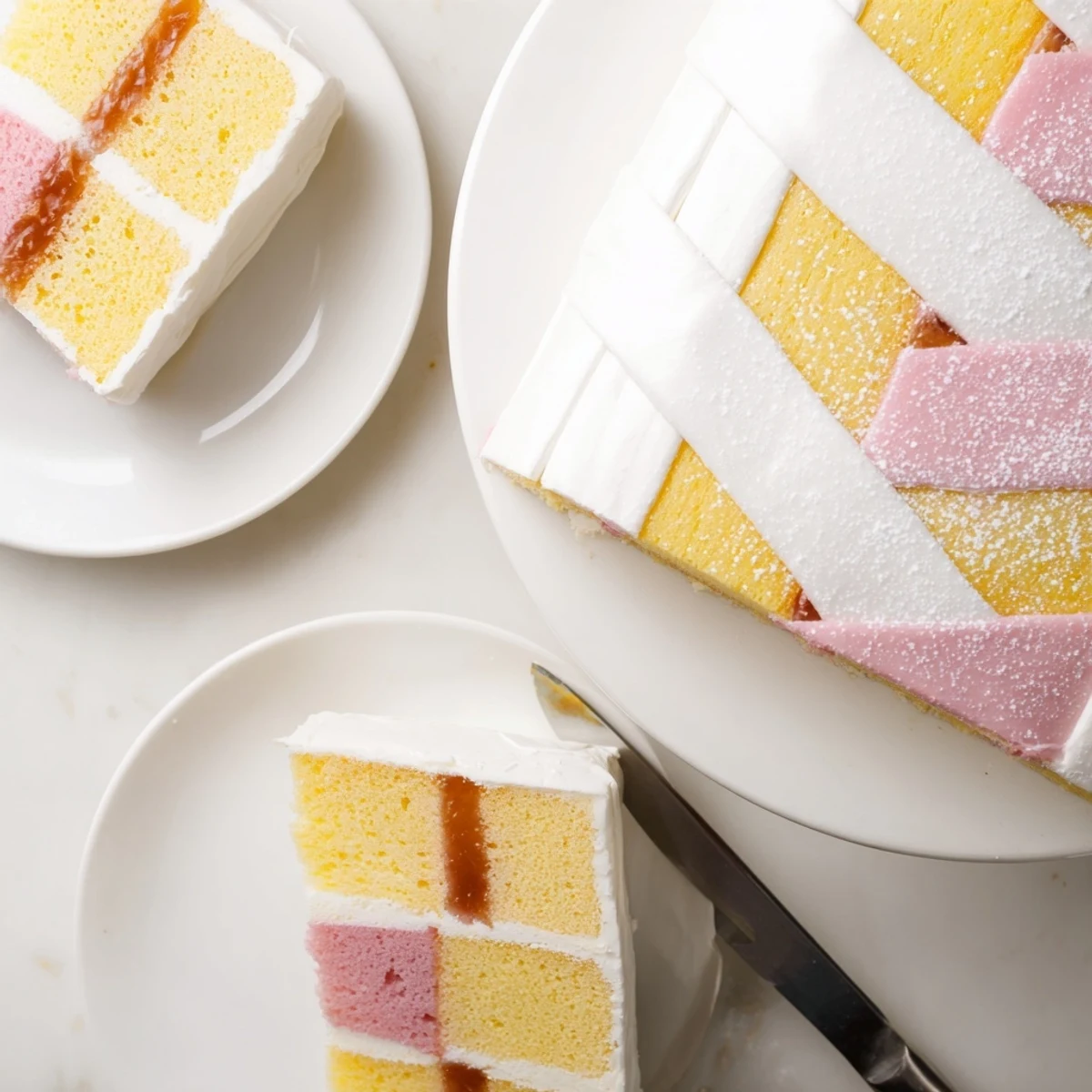
Save There's something almost meditative about assembling those little squares, arranging them just so, and wrapping them up like a present. My niece now helps me every time, and she's become the official checkerboard inspector, making sure each pink square has its yellow counterpart. Those quiet moments in the kitchen, measuring and trimming and brushing jam, have become some of my favorite hours spent with her.
Getting That Perfect Checkerboard
The trick is trimming your sponges so they're exactly the same width and height before you start assembling. I learned this after my first attempt where one side was distinctly taller than the other, resulting in a leaning tower of Battenberg that refused to stand up straight. A ruler and a sharp knife are your best friends here, and don't worry about wasting the trimmings they're the baker's privilege.
Working With Marzipan
Marzipan can be temperamental, especially on warm days. If it's too soft, pop it in the fridge for 15 minutes. If it's cracking at the edges, warm it in your hands for a few seconds. The goal is pliable but not sticky, and it should roll out smoothly without fighting back. I've found that working on a cool marble or granite surface helps enormously when the weather is warm.
Make It Your Own
While traditional Battenberg uses apricot jam and the classic pink and yellow combination, don't be afraid to experiment once you've mastered the basic technique. Raspberry jam creates a beautiful pink tint to the filling, and I've seen stunning versions using lemon curd or even chocolate ganache. Some bakers colour their sponges with natural ingredients like beetroot juice or matcha powder for a more subtle approach.
- Try brushing the assembled cake with a little warm jam before wrapping it in marzipan this helps the marzipan stick
- If your marzipan starts to dry out while you're working, knead in a tiny bit of cooled boiled water
- Score the top of your finished cake with a diagonal pattern for that classic Battenberg look
 Save
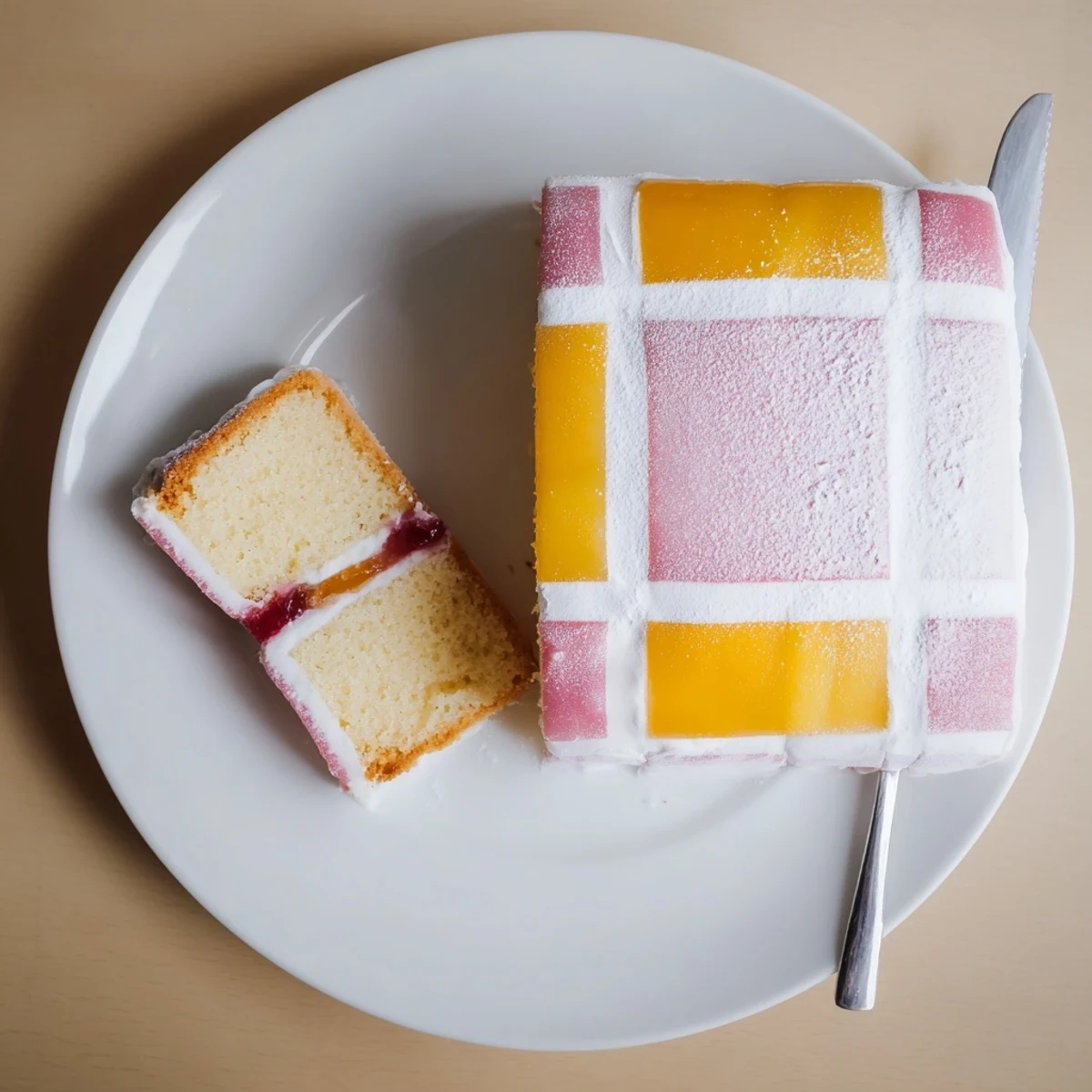
Save This cake has a way of making any occasion feel special, whether it's a proper British afternoon tea or just Tuesday afternoon with a cup of tea and a good book.
Recipe FAQs
- → What makes Battenberg cake distinctive?
-
Battenberg cake is famous for its signature checkerboard pattern of pink and yellow sponge squares, held together with apricot jam and completely wrapped in marzipan. This geometric design has made it a quintessential British teatime treat since the late 19th century.
- → Can I make Battenberg cake without marzipan?
-
Traditional Battenberg requires marzipan for its authentic appearance and flavour profile. However, if you have a nut allergy, you could try using ready-to-roll fondant icing instead, though this will significantly alter the classic taste and texture.
- → How do I achieve the perfect checkerboard pattern?
-
The key is baking two separate coloured sponges in the same tin divided by a parchment wall. Once cooled and trimmed, cut each sponge lengthwise into two equal strips. Brush with apricot jam and alternate the colours when stacking to create the signature checkerboard effect before wrapping in marzipan.
- → How long does Battenberg cake keep?
-
When stored properly in an airtight container at room temperature, Battenberg cake will keep for up to 4 days. The marzipan covering helps keep the sponge moist. Avoid refrigerating as this can cause the marzipan to become sticky and the sponge to dry out.
- → What flavours work well in Battenberg cake?
-
The classic combination features vanilla and almond extracts with apricot jam. You can experiment with different jam flavours like raspberry, cherry, or blackcurrant. Some bakers add lemon zest to the yellow sponge or replace the almond extract with rose water for a fragrant variation.
- → Why does my Battenberg sponge crack?
-
Cracking can occur if the oven is too hot or the cake is overbaked. Ensure your oven is accurately calibrated and don't open the door during baking. Using the correct flour and not overmixing the batter also helps maintain a tender sponge that won't crack.